
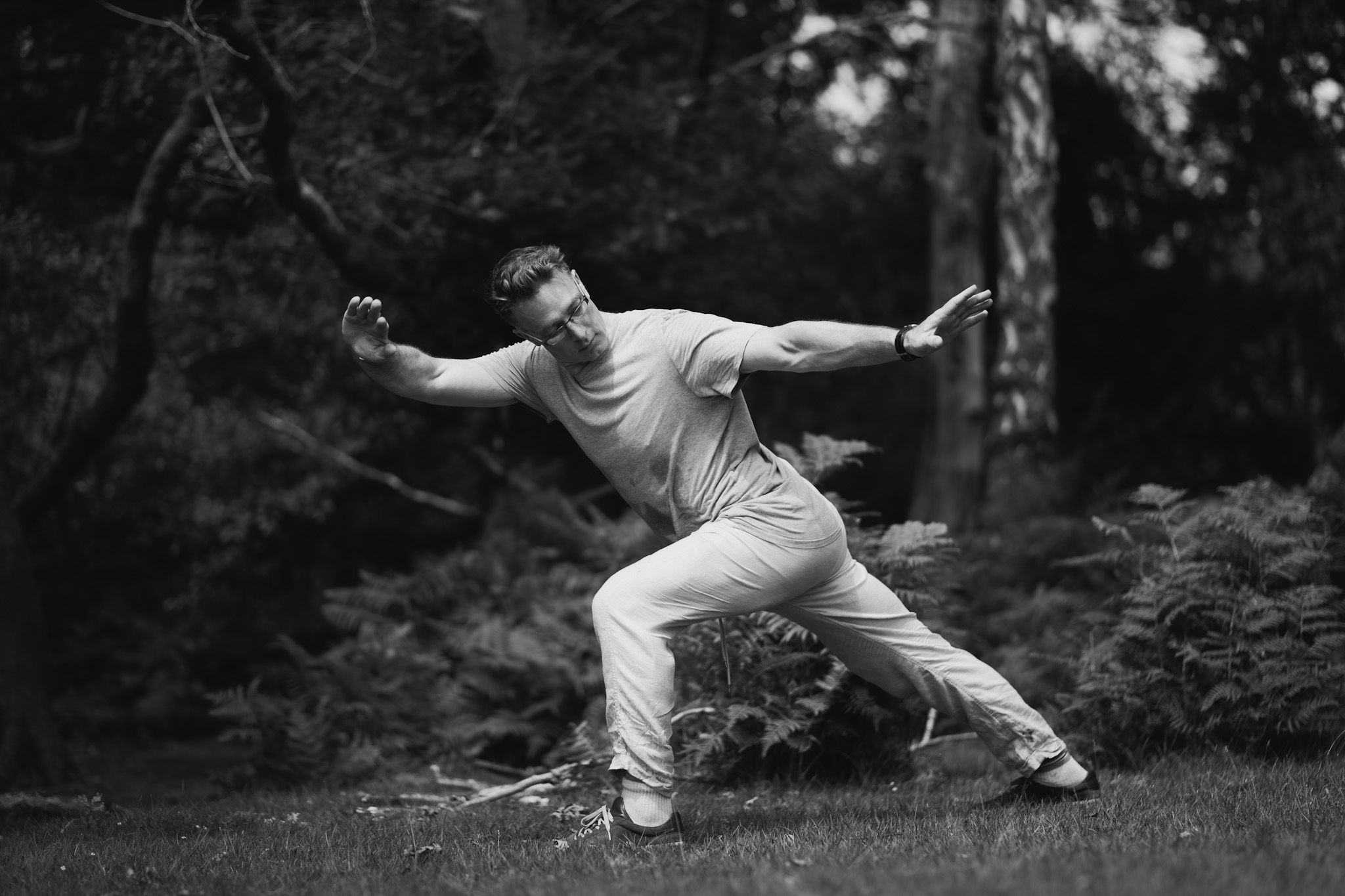
Internal Power Development / Neigong
Neigong sits where meditation and physical training meet. Most modern fitness is about building visible muscle. Neigong is about something less visible but far more useful: internal efficiency — a body that runs cleaner, recovers faster, and supports everything else you’re trying to do in the art.
What it does for your body
Specific postures and repetitive movement build a kind of strength that goes beyond muscle size. The breathing method — diaphragm expanding down and out on the inhale, drawing in on the exhale — gently works your liver, stomach, and intestines with every breath, almost like an internal massage. That same rhythm keeps your circulation open and your blood vessels healthy, which matters more than it sounds: poor circulation and inefficient metabolism are what drive long-term issues like arteriosclerosis. Neigong is a direct safeguard against that slow decline.
What it does for your mind
A calm mind is a real asset — in a fight, and in ordinary life under pressure. Neigong trains that calm directly. Deep concentration on precise movement has an almost sedative effect on your nervous system, and over time you develop a genuine ability to filter out distraction and stay clear-headed regardless of what’s happening around you. The old principle here is simple: thought leads action, not the other way round. Precision beats brute force, every time.
What it does for how you move
Neigong is one of five pillars this whole system is built on — alongside the Hand Form, Pushing Hands, Self-Defence, and Weapons. It’s the engine underneath all of them. Relaxed muscles and tendons let your joints rotate smoothly instead of fighting themselves, which is what actually makes you fast and adaptable under pressure. And there’s a deeper principle at work: yielding beats resisting. Rigid things break under enough force. Flexible things bend, absorb, and spring back — like bamboo in a storm. Staying relaxed even when things get intense is also what keeps your reactions fast; tension is what locks people up in a crisis.
The breathing is the whole point
Neigong’s approach to breath is different from how most exercise treats the lungs. Instead of forcing air in and out through hard chest expansion, you breathe deep and downward — into the Dantian, a point just below the navel — protecting your heart and lungs from the wear that comes with high-strain training, while still nourishing your organs with every cycle.
The structure of the practice
There are 24 exercises in total, split into two sets of 12 — Yin and Yang. Traditionally you practise one set one day, the other the next. You can work through just a few, or the full set of 12 in one sitting, which takes most people around an hour.
Closing CTA:
Ready to learn the full system? [The Tai Chi Neigong Course →] — £490


