

Conventional weight training (often bodybuilding style) focuses on moving one limb at a time to isolate and “pump up” a single muscle using simple movement patterns. This approach actually creates a “de-training effect” on the nervous system, which can make a martial artist’s movements slow and “clunky”.
In contrast, the lead weight training described in Cheng Tin Hung’s system is a form of highly specific performance conditioning designed to train the nervous system for explosive martial power. Its advantages include:
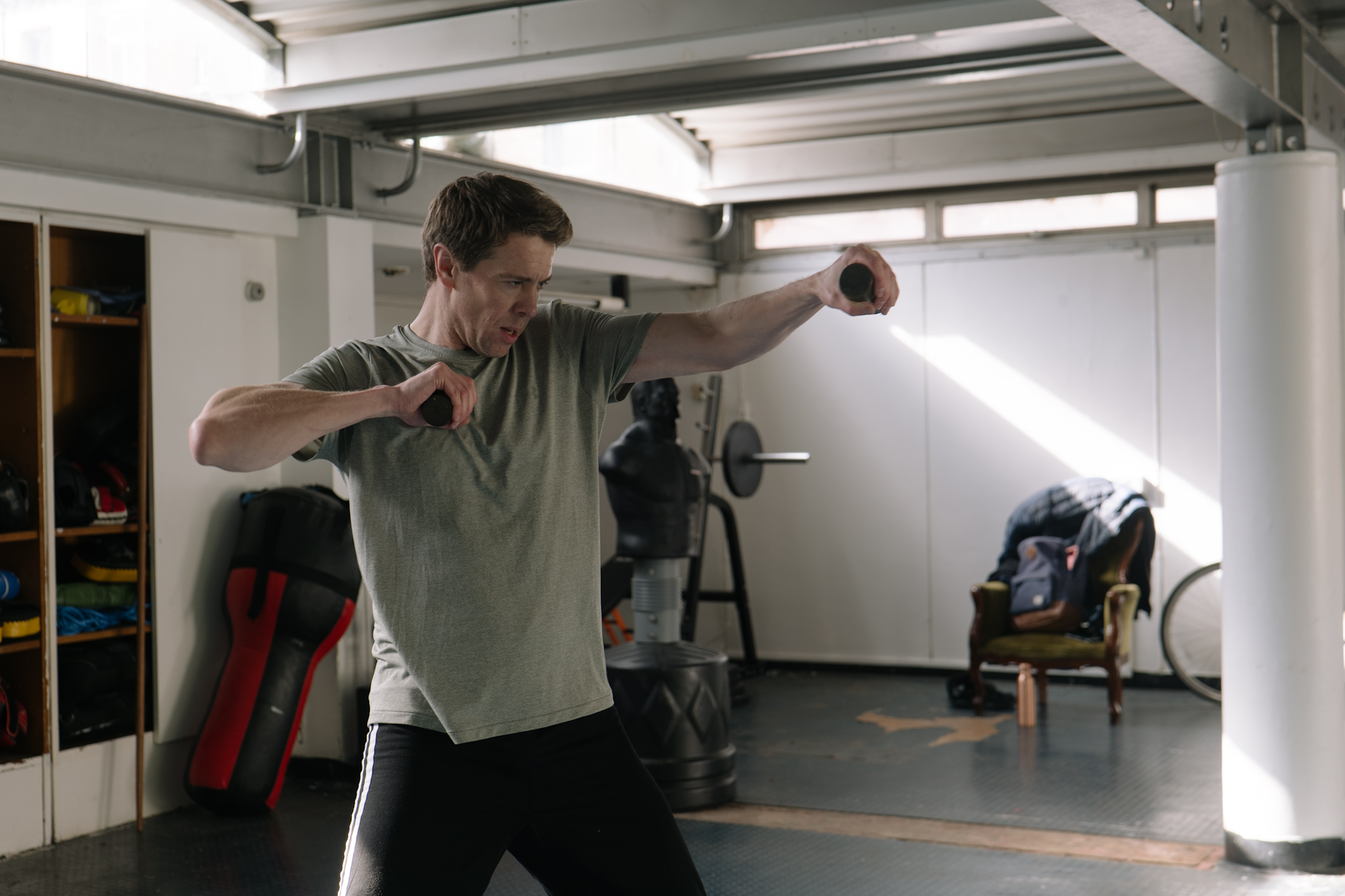
- Maximizing Speed Over Muscle Bulk: Instead of lifting heavy weights slowly to build muscle size, the practitioner grips heavy lead balls (wrapped in copper tubes) and executes continuous, circular strikes like the “Running Thunder Fist”. The drill requires maintaining a rapid pace of 100 punches per minute for a grueling 20 minutes, placing the strict physical emphasis entirely on developing speed rather than bulky muscle.
- The Neurological “Contrast Effect”: Immediately after the 20-minute weighted drill, the practitioner puts the lead balls down and throws a couple of hundred additional punches empty-handed to loosen the muscles. Because the lead is so heavy, putting the weights down creates a neurological contrast where the hands suddenly feel incredibly light, drastically accelerating the practitioner’s pure punching speed.
- Whole-Body Sequencing: By applying resistance directly to Tai Chi martial movements rather than isolated joint exercises, the training forces the muscles to work together efficiently in a unified sequence. This produces massive positive adaptations in the nervous system, ensuring the body remains highly coordinated rather than becoming clunky.
- Increasing “Rate of Force Development”: Applying heavier resistance to these specific striking movements specifically trains the body’s “rate of force development”—which is the neurological ability to explode and maximally produce force in a fraction of a second.