
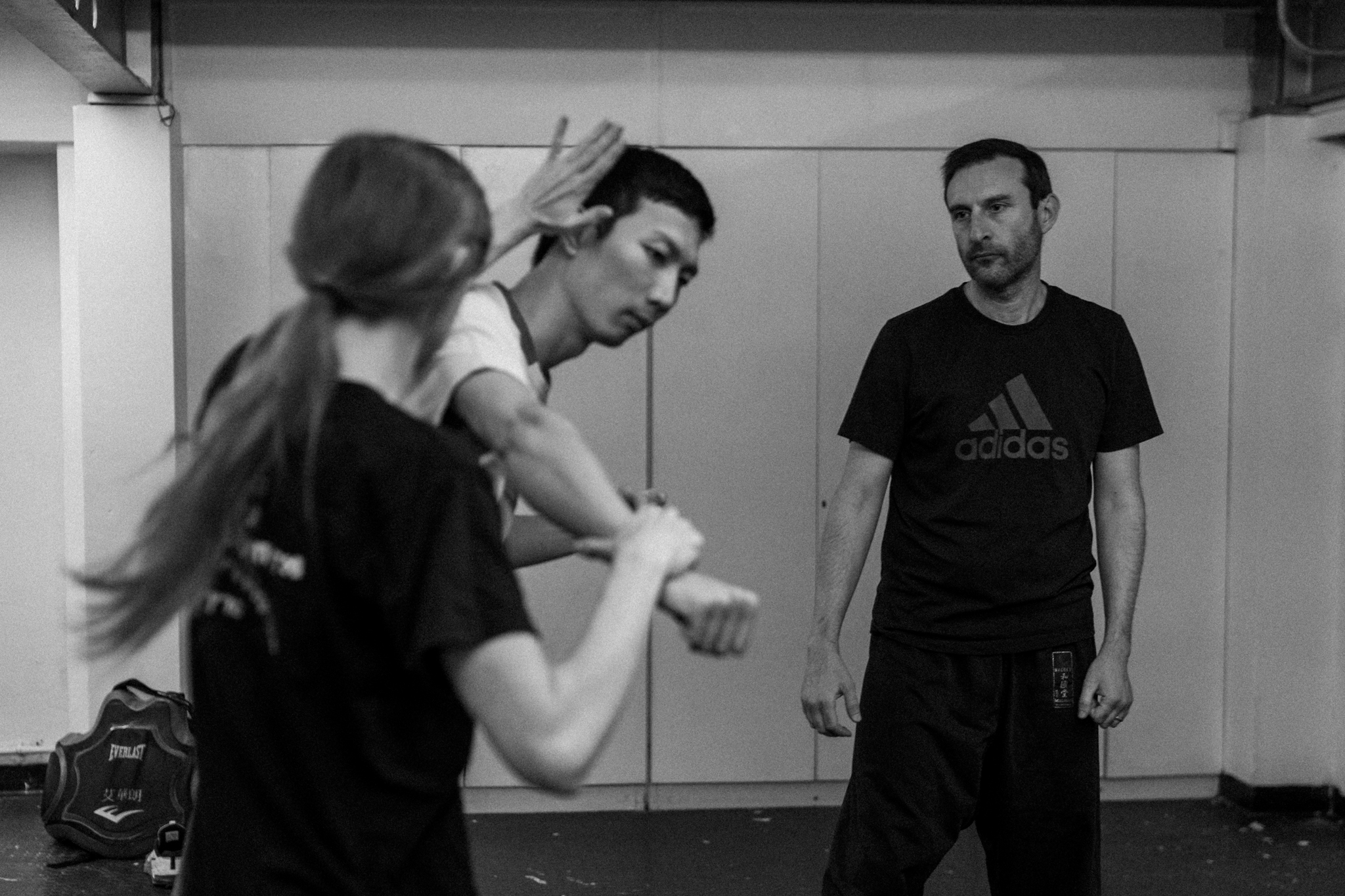
Freefighting / Self-Defence
Most martial arts train you to meet force with force. Tai Chi does the opposite — and it’s not a gentler choice, it’s a smarter one.
Fighting hard triggers tension, and tension clouds judgement. When you’re tight and reactive, you make worse decisions under pressure — that’s just how the nervous system works. Staying soft keeps your mind in control instead of your adrenaline. You don’t give an opponent a solid target to hit, and their own force ends up working against them.
Why the “soft” body is actually tougher
Internal training builds real physical resilience — joints and muscles with genuine elasticity, able to absorb and redirect force that would injure someone who trains purely for size and rigidity. Relaxed, deliberate movement keeps blood flowing freely, which means better stamina and faster recovery. The breathing method we use — expanding down into the belly rather than out through the chest — keeps your heart rate steadier under stress and actually toughens your internal organs against impact over time. You’re not just harder to hurt. You’re built to last through a fight, not just survive the first exchange.
How it actually works in a fight
Soft beats hard on speed too — think of a rope moving faster than a rigid stick because it isn’t fighting its own tension. Add real tactile sensitivity — the ability to feel a change in someone’s intention through contact, faster than your eyes could ever process it — and you’re reacting before their strike has even fully formed. From there it’s about redirecting force rather than blocking it (using next to nothing to send an attack off-target), sticking close so they can never create distance or reset their balance, and finding the specific angles — the diagonal gaps in someone’s stance — where a much stronger opponent can be toppled with very little effort. When power is actually needed, it comes out as a short, sudden release — hidden until the moment it lands.
It’s been proven, not just theorised
Between 1970 and 1980, practitioners from this lineage won 31 of 32 full-contact matches in international competition — genuinely brutal rules, near enough anything legal. And unlike styles built on raw strength and speed, which fade as you age, this approach only gets sharper with time. People in their 70s, 80s, even 90s within this tradition can still effectively defend themselves — because refined skill and structure beat muscle mass at any age.
And it’s genuinely good training
Beyond the philosophy, this is hands-on, physical, varied work — set drills, freestyle sparring, bag and pad work, and conditioning alongside it. It’s demanding, but it doesn’t feel like a lecture. It feels like training.
Closing CTA:
Ready to build this into your training? [Tai Chi Self Defence Course →] — £333


