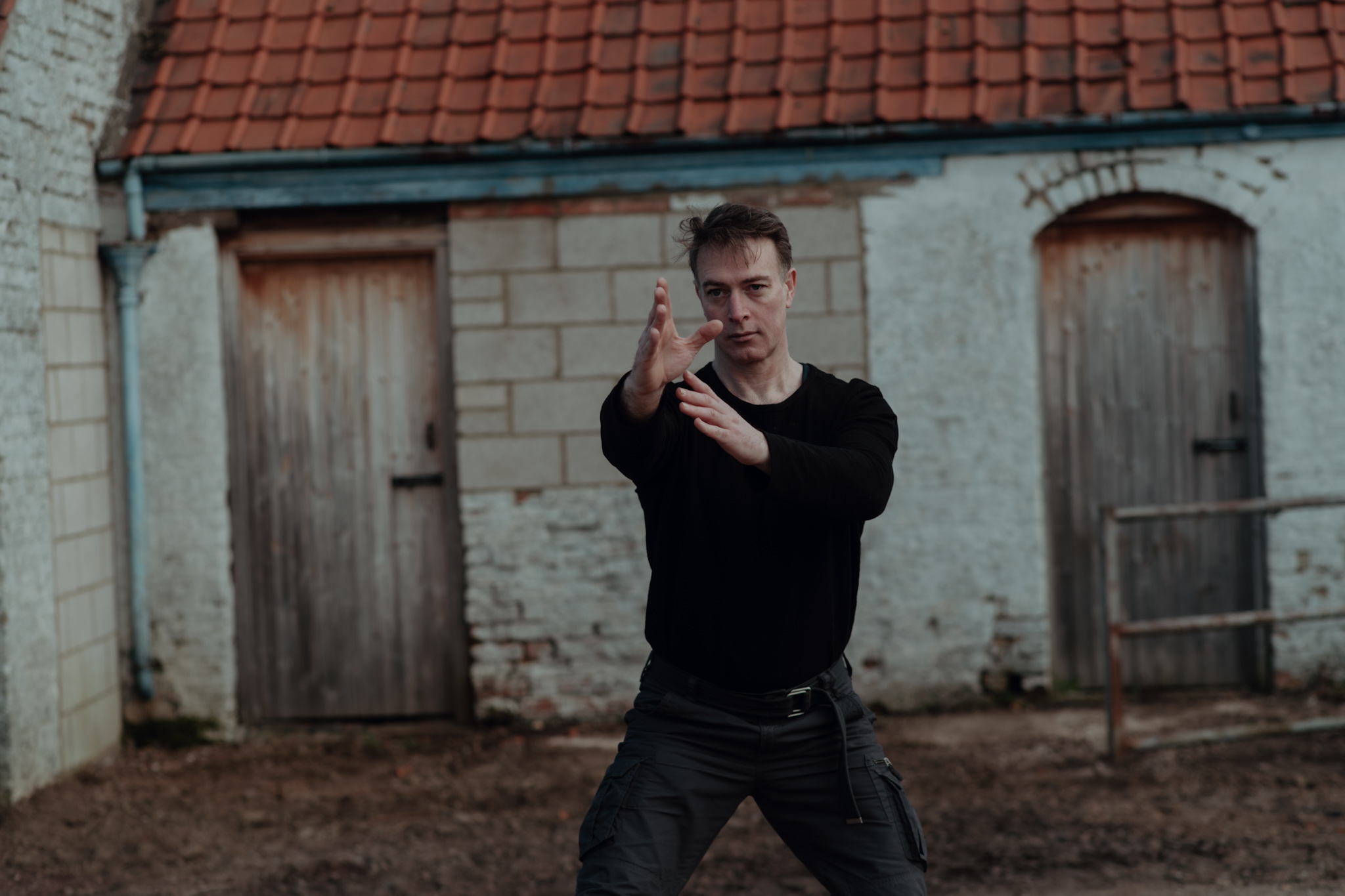


The Paradigm Shift: T’ai Chi as a Combative System
For the high-performance professional in London, time is an asset that demands a high rate of return. T’ai Chi Chuan is frequently miscategorized as a low-impact restorative exercise, yet its fundamental core is a sophisticated, “Practical” combative system.
This is the Transcendent Art—a codified system for practical self-defense (実用自衛術秘本) that moves beyond aesthetic motion to master the empirical realities of free fighting (San Shou) and tactical grappling (Tui Shou).
The distinction between “health-orientated” T’ai Chi and Practical T’ai Chi Combat is rooted in biomechanical intent. We do not merely seek relaxation; we utilize the art for force dissipation, kinetic linking, and the application of torque to neutralize high-velocity strikes.
By shifting from slow-motion forms to the “Transcendent Art,” practitioners develop a strategic framework for combat that is both scientifically sound and traditionally grounded. True mastery requires this synthesis: a foundation built on an authentic, battle-tested lineage, optimized by modern athletic science.
A Lineage of Champions: The Cheng Tin Hung Tradition
Authenticity in combat is verified by results. The training offered is rooted in the Wudang tradition and the technical pedigree of the Hong Kong T’ai Chi Association, established by the legendary Great Master Cheng Tin Hung. Known as the “Tai Chi Bodyguard,” Cheng revitalized the art’s reputation by proving its efficacy in the most violent testing grounds of 20th-century Asia.
The lineage of Neil Rosisk traces a direct line of combative dominance through Dan Docherty, a primary disciple of Cheng Tin Hung. This tradition is not one of theory, but of championship-level execution:
- The 1957, 1969, and 1971 Milestones: Cheng Tin Hung’s students did not merely compete; they dominated the full-contact arenas of Singapore and Taiwan, establishing the system’s “Practical” reputation.
- 1980 South East Asian Martial Arts Tournament: Dan Docherty secured the Open Weight (Super Heavyweight) Title in Malaysia, proving that the system’s mechanics could overcome the sheer mass and aggression of elite international fighters.
- Modern Pedigree: This lineage continues to produce results in international forums, including the 2007 Zhejiang International competition, ensuring the “Source Code” of the art remains intact.
The Combat Resume: Empirical testing from Pushing Hands to MMA
The efficacy of our training system is not a matter of faith; it is a matter of record. Neil Rosiak’s competitive history serves as the “proof of concept,” demonstrating that the principles of Practical T’ai Chi remain valid across the spectrum of modern combat sports.
- British Pushing Hands Championship: Secured at age 18, demonstrating an early mastery of biomechanical leverage and tactile sensitivity.
- 1994 Taiwan World Championship: Neil maintained an undefeated match record, validating the system in the competitive heart of the traditional Chinese martial arts world.
- 1997 “Night of the Samurai” (Professional Heavyweight MMA): In a radical act of empirical validation, Neil entered the professional heavyweight MMA arena. This appearance was a critical “stress test,” proving T’ai Chi’s utility in a high-stakes, multi-disciplinary environment.
- 2000 European T’ai Chi Championships: Neil and his students achieved a collective 23-0 match record, solidifying his position as a preeminent coach capable of reproducing elite-level results in others.
- Neil subsequently trains dozens of national and international tai chi pushing hands and full contact fighting champions
- He also spends years working as a bouncer in the nightclubs of London pressure testing the techniques of t’ai chi in unforgiving environment.
This background, bridging traditional mastery with the demands of professional heavyweight MMA and nightclub security has been distilled into a pedagogical system designed for the next generation of high-achievers.
The Curriculum of Combat: Neigong, San Shou, and Weapons
The curriculum is a logical progression from internal development to external application, ensuring the practitioner possesses both the physical engine and the tactical tools for combat.
The Training Pillars
- Neigong (Internal Strength): The engine of the system comprises 24 total exercises (12 Yin and 12 Yang). These are not mere stretches; they are specific conditioning protocols for internal power. Key exercises such as the Turtle (Se Kam), Crane (Sin Hok), and Snake (Sa Tche) forge the structural integrity and explosive potential required for high-level combat.
- Tui Shou (Pushing Hands): This is the bridge to combat. It develops the sensitivity to “Stick, Adhere, Join, and Follow,” applying the core principle of “Four Ounces Deflecting a Thousand Pounds” (牽動四兩撥千斤). The goal is to use minimal force to neutralize maximal mass.
- San Shou (Free Fighting) and Die Pu: We focus on the application of strikes, joint locks, and Tai Chi Falling/Throws (Die Pu). By neutralizing a strike’s momentum, the practitioner utilizes biomechanical leverage to transition seamlessly into devastating takedowns (as seen in the classic transitions from neutralizing to throwing).
- The Arsenal: Mastery of the body is extended through the Dao (Saber), Jian (Sword), and Qiang (Spear). These traditional weapons are treated as mechanical extensions of the body’s core power.
The Strength & Conditioning Edge: Sports science Integration and Kettlebell training
What distinguishes our martial arts approach is the integration of high-level sports science. Neil Rosiak holds a Master of Science (MSc) in Strength and Conditioning from the University of Edinburgh, allowing for a clinical approach to traditional training. We employ a unified theory of combat conditioning that synthesizes ancient Neigong with modern “ballistic loading.”
From the 7-time World Champion Vasily Ginko in Latvia, the program incorporates elite-level Kettlebell Lifting (Girevoy Sport).
By pairing the internal structural development of the Twelve Yin and Yang exercises with the external explosive power of kettlebells, we forge the “heavyweight” power required for practical combat.
Every training session is scientifically programmed for optimal performance and durability.
Training for the Modern Professional in London
Practical T’ai Chi Combat is designed for those who seek truth in the art through a scientific, lineage-based approach. We provide an environment where ancient tradition meets empirical performance science.
- Unbroken Lineage: Direct combative transmissions from Cheng Tin Hung and Dan Docherty, proven over 50 years of international competition.
- Scientific Programming: Professional physical development based on scientific Strength and Conditioning and Girevoy Sport methodologies.
- Elite Pedagogical Record: Training under a master who has consistently produced National, European, and World Champions.
We invite high-achieving professionals to experience the reality of Practical T’ai Chi Combat. This is exclusive, high-performance training for those who demand the truth of the art.